The complete guide
Getting started with reusable cloth nappy liners: a simple guide
Cloth nappies can feel like a big change until you realise most of it comes down to a few simple habits. The liner is the piece that makes the mess manageable: a soft layer that sits inside the nappy, does the catching, and lifts out for the wash. This is a short, practical guide to using reusable cotton liners well.
What the liner does
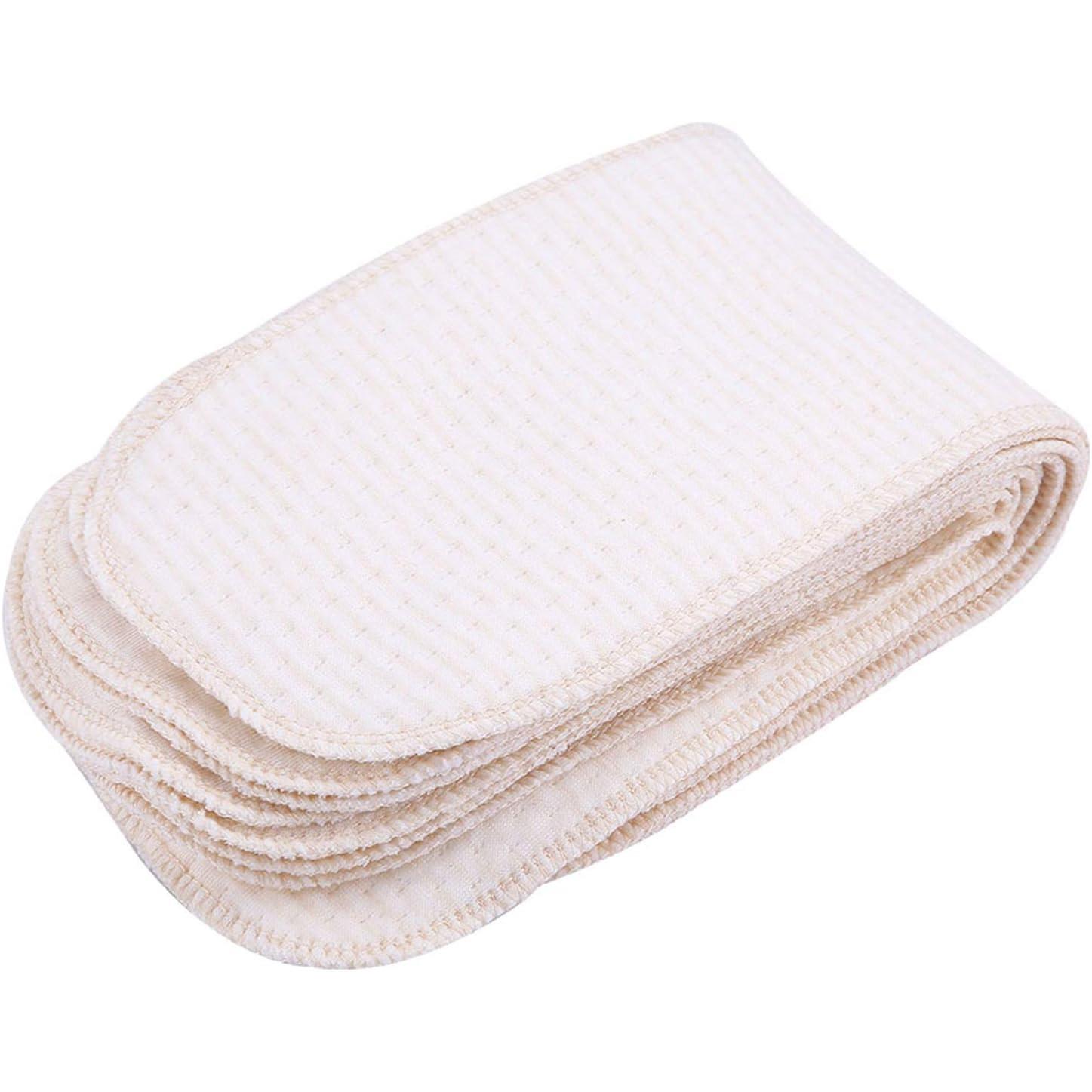
Inside a cloth nappy, the liner is the layer against your baby's skin. It catches and holds what the nappy needs to deal with, and spreads the wetness across the whole rectangle instead of one soaked patch. That keeps the nappy itself cleaner and makes each change quicker. When you change your baby, the liner comes out with everything else and goes into the wash — no separate step, no throwing anything away.
Putting one in
There is nothing to master. Lay a liner flat inside the nappy, or fold it once for a bit more thickness where you need it, then put the nappy on as usual. Keep a few liners in the changing bag and a stack by the mat so a clean one is always within reach.
Daytime changes and night-time boosting
For daytime, change the liner as often as you would change any nappy. At night, when a nappy has to last much longer, add a liner inside as a booster: the extra layered cotton holds more, which is usually the difference between a dry morning and an early one.
Washing and drying
Wash the liners with your normal nappy load, warm, using a gentle, fragrance-free detergent. Skip fabric softener — it leaves a coating on cotton that stops it soaking up. Line dry where you can, or tumble dry on low. Give brand-new liners a wash or two before their first use; natural cotton reaches its full absorbency after a few washes.
Pairs beautifully with the muslin blanket
Building a cloth-and-cotton routine? These liners sit alongside our six-layer cotton muslin blanket — the same soft-cotton, wash-and-reuse thinking, for the pram and the changing mat.